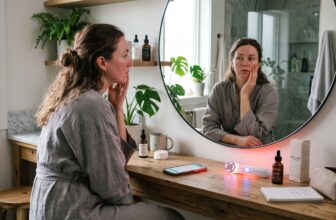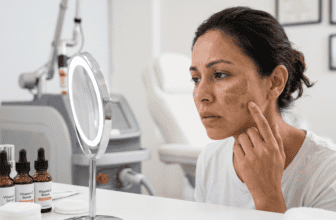

It happens almost overnight. You’re standing in front of the vanity, applying a shimmer eyeshadow you’ve loved for years, and as soon as you open your eyes, the color vanishes. It’s swallowed by a fold of skin that wasn’t there five years ago. Or perhaps it’s the “tired” comments from coworkers when you’ve actually had a full eight hours of sleep. This is the “mirror moment” for many women over 40: the realization that hooded eyelids aren’t just a structural trait anymore—they are a sign of gravitational shift.
While the gold standard for correcting severe sagging is blepharoplasty (eyelid surgery), not everyone is ready for the scalpel, the $5,000 price tag, or the risk of looking permanently surprised. The good news? You can significantly improve the appearance of heavy lids at home. This guide explores how to fix hooded eyelids naturally by ranking the most effective non-surgical interventions, from high-tech microcurrent to the “instant lift” topicals that work in minutes. Before we dive into the solutions, it’s essential to understand why this happens in the first place.
Learn more about the biology of skin aging and how it affects your facial structure here.
The Science: Why Eyelids Hood After 40
Hooded eyelids, or “ptosis” in its more medical form, are rarely the result of just one factor. As we cross the threshold of 40, a “perfect storm” of biological changes occurs in the upper third of the face. First and foremost is the loss of collagen and elastin. The skin on the eyelids is the thinnest on the entire body, making it the first to lose its “snap-back” quality. When the structural proteins degrade, the skin begins to drape over the natural crease of the eye.
Secondly, we have to look at brow descent. The forehead muscles (frontalis) act as the primary elevators for your eyebrows. As these muscles weaken or the fat pads beneath them shift downward, the entire brow line drops, pushing excess skin onto the lids. Finally, there is the issue of the orbital fat pads. In some cases, the membrane holding these fat pads in place weakens, causing them to herniate or bulge, creating a heavy, puffy appearance.
The “Anti-Blepharoplasty” Movement: Why Women Are Choosing Home Care
While eyelid surgery (blepharoplasty) is one of the most common cosmetic procedures performed globally, there is a growing movement toward “pre-juvenation” and non-invasive maintenance. The reasons are largely practical. A surgical brow lift or blepharoplasty typically costs between $3,000 and $7,000, and insurance rarely covers it unless your vision is physically impaired.
Beyond the cost, the recovery involves two weeks of significant bruising and swelling. There is also the “asymmetry risk”—the fear that one eye will look slightly different than the other, or worse, the “hollowed-out” look that occurs if a surgeon removes too much fat. For women looking to maintain their natural character while simply looking “refreshed,” at-home methods offer a way to tighten the skin and lift the brow without the permanent risks of surgery.
At-Home Comparison: Cost vs. Results
| Method | Estimated Cost | Pain Level | Downtime | Time to Results |
|---|---|---|---|---|
| Blepharoplasty | $3,000 – $7,000 | Moderate | 10-14 Days | 3-6 Months |
| Botox Brow Lift | $300 – $600 | Low | None | 7-10 Days |
| Microcurrent Device | $200 – $500 | None | None | 4-8 Weeks |
| Peptide Topicals | $50 – $150 | None | None | 8-12 Weeks |
| Instant Lift Gels | $30 – $70 | None | None | 5 Minutes |
The 7 At-Home Methods That Actually Lift Hooded Eyes
Not all at-home treatments are created equal. Some provide a temporary cosmetic “tightening,” while others work on the underlying muscle and skin structure to provide a lasting lift. Here are the top seven methods, ranked by clinical efficacy and user satisfaction.
1. Microcurrent Eye Devices (The “Non-Surgical Lift”)
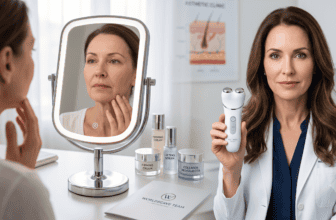
Microcurrent is often referred to as a “gym workout for your face.” These devices emit low-voltage electrical currents that mimic the body’s natural impulses, stimulating ATP (adenosine triphosphate) production and toning the facial muscles. When used around the brow bone, microcurrent “re-educates” the muscles that hold the eyebrow up, creating a natural lift that opens the eye area. Using a specialized attachment like the NuFACE Trinity ELE or the Foreo Bear Mini allows for precise targeting of the supraorbital nerve area.
For a deeper dive into how these technologies work, check out our full microcurrent device guide to see which tool fits your budget and goals.
2. Targeted Peptide Eye Creams
Peptides are short chains of amino acids that act as messengers, telling your skin to produce more collagen. For hooded eyes, you specifically want “signal peptides” and “neuropeptides.” Neuropeptides can slightly relax the muscles that pull the brow down, while signal peptides work on thickening the crepey skin on the lid itself. Look for ingredients like Matrixyl 3000 or Argireline, which is often called “Botox in a bottle.”
You can read our full Olavita review to see how its peptide concentration compares to high-end medical-grade serums.
3. At-Home Microneedling (The Collagen Induction Method)
Microneedling involves creating microscopic “injuries” in the skin to trigger the body’s natural healing response. When used carefully around the orbital bone (never on the soft eyelid itself), a dermaroller or glow-stick can thicken the skin of the brow and temple. This increased density prevents the skin from sagging downward. Using a device with 0.2mm to 0.3mm needles is safe for home use and helps your firming serums penetrate 200% deeper.
The BeautyBio GloPRO with the Eye Attachment is the safest tool for periorbital microneedling.
For more on this technique, see our Seranova or BeautyBio GloPRO reviews for a side-by-side comparison of needle quality.
4. Retinol for the Eye Area
Retinol is the only FDA-approved topical for actually reversing the signs of aging by increasing cell turnover. However, the skin on the lids is prone to irritation. Using a stabilized, encapsulated retinol specifically formulated for the eyes can help tighten “crepey” lid skin over time. By strengthening the dermis, the skin becomes less prone to draping.
RoC Retinol Correxion Eye Cream is a budget-friendly, clinically proven option.
If your main concern is the “crinkling” of the lid skin, you may also want to read our Crepe Erase review for tips on treating thin, parchment-like skin.
5. Brow-Lifting Facial Exercises
Facial yoga or exercises focus on strengthening the frontalis (forehead) muscle. One effective move is the “Temple Lift”: place your palms on your temples, pull the skin back and up slightly, and then try to close your eyes tightly against the resistance. This strengthens the muscles around the eye, providing more structural support for the skin. While results take time—usually 6 to 8 weeks of daily practice—this is a completely free way to fight gravity.
The Face Yoga Method book provides a comprehensive routine for eyelid ptosis.
6. Instant-Lift Topicals (Upneeq & Plexaderm)
If you have a wedding or a big event and need a fix in five minutes, instant-lift topicals are the answer. Products like Plexaderm use silicate minerals to create a temporary “film” that pulls the skin taut as it dries. Alternatively, Upneeq is an FDA-approved eye drop that stimulates the Mueller’s muscle (an involuntary muscle in the eyelid) to contract, lifting the lid by 1-2mm for several hours.
Plexaderm Rapid Reduction Serum for an instant 6-hour eyelid lift.
7. Eyelid Lifting Tapes (The “Invisible” Fix)
Common in Asian beauty markets and now mainstream in the US, eyelid tapes are small, medical-grade adhesive strips that you place in the crease of the eye. They physically hold the skin back, instantly removing the hood. Modern versions are skin-toned or transparent and can be covered with makeup, making them a favorite for red-carpet appearances.
Contour Rx LIDS BY DESIGN are the gold standard for non-surgical eyelid strips.
Makeup Techniques to Visually Lift Hooded Eyes
While you wait for your microcurrent and peptides to work, makeup is your best friend. The goal for hooded eyes is to “recreate” a crease where one has been lost.
- The “Straight Line” Technique: Instead of following the downward curve of your eye with eyeliner, draw a straight line out toward your temple. This counteracts the drooping “puppy dog” eye shape.
- Matte Over Shimmer: Shimmer reflects light and can make a “hood” look more prominent. Use matte shadows on the hooded area to make it recede visually, and save the shimmer for the very center of the lid.
- The Faux Crease: Apply a medium-brown transition shade slightly *above* your natural crease while your eyes are open. This creates the illusion of a higher eye socket.
The Stacked Protocol: Your AM/PM Routine
To see real results without surgery, you must “stack” these methods. A single eye cream won’t fix a sagging brow, but a combination of muscle stimulation and skin thickening will.
The Morning Routine (Lift & Protect)
- Cleanse: Use a gentle, non-stripping cleanser.
- Stimulate: Use your microcurrent device for 3 minutes per eye, focusing on the arch of the brow.
- Instant Fix: Apply an eyelid lifting serum or Upneeq drops if needed for a “wide-awake” look.
- Protect: Apply an SPF 30+ eye cream. UV damage is the #1 cause of elastin breakdown.
The Evening Routine (Repair & Rebuild)
- Target: Apply a peptide-rich serum to the entire orbital area.
- Renew: Apply a pea-sized amount of encapsulated retinol to the brow bone and under-eye.
- Massage: Perform 2 minutes of manual lymphatic drainage massage to reduce morning puffiness that stretches the skin.
When Does Surgery Actually Make Sense?
At-home methods have limits. If your eyelid skin is hanging so low that it is obstructing your peripheral vision (a condition known as functional ptosis), surgery is often the most appropriate and medically necessary route. Furthermore, if the hooding is caused by a significant “fat pad” protrusion rather than just skin laxity, topicals will not be able to dissolve that tissue. In these cases, a consultation with a board-certified oculoplastic surgeon is recommended.
The American Academy of Ophthalmology’s guide on when eyelid drooping becomes a medical concern.
Frequently Asked Questions
Can hooded eyelids be reversed naturally?
While you cannot “undo” significant genetic hooding, you can reverse age-related sagging by strengthening the forehead muscles and increasing skin density through microcurrent and retinoids. Results are about “improvement” rather than “erasure.”
Does eye cream actually work on hooded lids?
Standard moisturizers won’t lift skin. However, creams containing high concentrations of peptides and caffeine can temporarily firm the skin and reduce the puffiness that makes hoods look heavier.
At what age do eyelids start hooding?
Most women begin to notice changes in their late 30s or early 40s as the “brow fat pad” begins to thin and move downward. By age 50, skin laxity usually becomes the dominant factor.
Does Botox lift hooded eyes?
Yes. A “Botox Brow Lift” involves injecting the muscles that pull the eyebrow down (the orbicularis oculi). This allows the forehead muscles to pull the brow up unopposed, creating a 1-3mm lift that lasts 3-4 months.
Final Verdict
If you are looking for the most effective way to fix hooded eyelids without surgery, you must address both the muscle and the skin. Creams alone are rarely enough. If you start with just one tool, make it a microcurrent device like the NuFACE Trinity with the ELE attachment. It is the only at-home method that addresses the muscular descent of the brow, which is the root cause of most hooded eyes. Pair this with a high-quality peptide serum, and you will see a visible difference in the “openness” of your eyes within 60 days.
For more advice on building a cohesive age-reversal strategy, don’t miss our upcoming guide on treating marionette lines and our full breakdown of at-home anti-aging solutions.