
Introduction: The “Mirror Moment” Hook
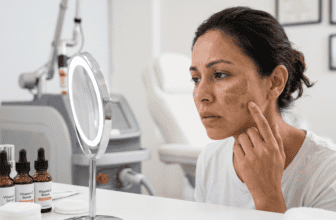
It usually happens in bad bathroom lighting, on a Zoom call, or in the front-facing camera: you catch your reflection and notice that your jawline looks softer, your mouth corners are pulling downward, and the skin beside your chin has started to fold. You have not “let yourself go.” You may have simply outgrown what firming creams can realistically do.
Many women over 40 spend hundreds on collagen serums, lifting creams, peptide moisturizers, and “instant tightening” masks, only to feel like their face is still sliding downward. The reason is simple: sagging skin, jowls, hollow cheeks, and marionette lines are not only surface-level skin problems. They are often caused by changes in collagen, fat pads, facial ligaments, bone structure, and muscle tone.
This guide is an honest expert audit of what at-home tools can do, what they cannot do, and when clinical treatments like filler, biostimulators, ultrasound, radiofrequency microneedling, or surgery may be more appropriate. If your goal is to improve sagging skin without filler, the best strategy is not “more cream.” It is a stacked, structural approach using consistent home-based repair, collagen support, and device-led stimulation. Collagen Truth: Clinical Guide to Dermal Longevity.
The Science: Why Marionette Lines and Sagging Skin Form After 40
Marionette lines are the vertical folds that run from the corners of the mouth toward the chin. They are commonly associated with aging, but they are not caused by one single thing. They form when several facial structures change at once.
1. Collagen and elastin decline
Collagen gives skin firmness, while elastin helps it “snap back.” After your 30s and 40s, collagen production slows, existing collagen becomes more fragmented, and skin becomes thinner and less resilient. This is why the lower face may look crepey, slack, or less defined. Revitalize Your Skin: The Essential Guide to Collagen & Elastin.
2. Facial fat pads shift and shrink
Younger faces have strategically placed fat pads that create cheek volume and support the mouth area. With age, some fat compartments shrink while others descend. When the midface loses support, the lower face often looks heavier, causing shadows around the mouth and chin.
3. Bone remodeling changes facial support
The facial skeleton is not static. With age, bone resorption can occur around the jaw, chin, and midface. Less bony support can make skin and soft tissue appear looser, even if your skincare routine is excellent.
How to prevent facial bone loss.
4. Muscle tone and repeated expression patterns matter
The muscles around the mouth, jaw, and neck are active all day. Over time, repetitive downward pulling, clenching, tech-neck posture, and loss of muscle tone can contribute to deeper folds and a less lifted appearance.
5. Topicals cannot reach every layer involved
Retinoids, antioxidants, exfoliating acids, and peptides can improve the quality of the skin surface and support collagen renewal in the upper layers. But a cream cannot physically replace lost cheek volume, reposition descended fat pads, tighten ligaments, or lift the SMAS layer in the way surgical or energy-based procedures may. This is why “firming cream” results often plateau.
The 3-Question Structural Audit: Is Your Sagging Skin a Skin Problem, a Volume Problem, or a Muscle Problem?
Before buying another device or serum, do this simple mirror audit in natural light.
Question 1: Do your lines soften when you gently lift your cheeks upward?
- If yes: your marionette lines may be partly caused by midface descent and volume loss.
- Best at-home focus: microcurrent, radiofrequency, collagen support, posture, and massage.
- Clinical option: cheek filler, biostimulatory filler, or professional skin tightening may give more visible correction.
Question 2: Is your skin thin, crepey, or etched even when your face is relaxed?
- If yes: you likely have skin-quality aging: collagen loss, sun damage, dehydration, or reduced elasticity.
- Best at-home focus: retinoids, LED red light, sunscreen, barrier repair, and possibly home radiofrequency.
- Clinical option: laser resurfacing, RF microneedling, chemical peels, or biostimulators.
Question 3: Do you clench your jaw, pull your mouth corners down, or have strong neck bands?
- If yes: muscle patterning and lower-face tension may be contributing.
- Best at-home focus: microcurrent, facial massage, jaw release, posture work, and consistent muscle re-education.
- Clinical option: neuromodulators may help in selected cases when performed by a qualified injector.
The “Anti-Filler” Movement: Why Women Are Looking for Alternatives
The anti-filler movement is not always anti-aesthetic medicine. For many women, it is about wanting to look refreshed without looking altered. Concerns about overfilling, pillow face, migration, cost, maintenance, and unpredictable results have led more people to explore non-injectable options first.
That said, it is important to be honest: if your main issue is true volume loss, no at-home device will replicate the immediate plumping effect of dermal filler. Filler physically replaces volume. Home devices stimulate, tone, or improve skin quality gradually. They are different tools for different problems.
The best candidates for at-home sagging skin devices are usually people with mild to moderate laxity, early jowls, soft marionette lines, dullness, or loss of facial “snap.” If you have severe skin laxity, deep folds, significant fat pad descent, or major hollowing, at-home tools can still support skin health, but clinical procedures will usually produce more dramatic results. Anti Filler Era.
The 7 At-Home Methods That Actually Work, Ranked
Rank #1: Microcurrent for Facial Muscle Toning and Subtle Lift
Best for: early jowls, soft jawline, mild marionette lines, facial heaviness, and loss of muscle tone.
Microcurrent devices, such as the NuFACE Trinity+ category of tools, deliver low-level electrical currents designed to stimulate facial muscles and support a more lifted look over time. Think of microcurrent as “facial fitness,” not filler. It does not add volume, but it may help improve tone, contour, and temporary lift when used consistently.
Microcurrent is especially useful for the lower face because marionette lines often worsen when the midface and mouth-area support system weakens. By treating the cheeks, jawline, and neck in a structured pattern, you may see a more awake and sculpted appearance.
- Use frequency: 5 days per week for the first 60 days, then 2–3 times weekly for maintenance.
- Timeline: some users notice a temporary lift immediately; more durable-looking improvement typically requires 8–12 weeks.
- Reality check: results disappear if you stop using it consistently.
Do not use microcurrent if you are pregnant, have a pacemaker or implanted electrical device, have epilepsy, or have certain medical conditions unless cleared by your physician.
NUFACE Trinity+ Microcurrent Facial Sculpting Tool
Rank #2: At-Home Radiofrequency for Skin Tightening Support
Best for: mild skin laxity, crepey lower-face skin, softened jawline, and collagen support.
Radiofrequency, or RF, uses heat to target the dermal layers and encourage collagen remodeling. Professional RF treatments are stronger than at-home devices, but home radiofrequency tools may still help improve firmness when used correctly and consistently.
This is one of the better “tech, not topical” options because it addresses the dermal support network more directly than a cream. However, RF requires patience and caution. More heat is not better. Overuse or incorrect use may irritate skin or, in rare cases, worsen fat loss concerns if excessive heat is applied improperly.
- Use frequency: usually 1–3 times weekly depending on the device instructions.
- Timeline: 8–16 weeks for visible changes.
- Reality check: at-home RF is not a facelift and will not correct advanced sagging.
Skin Tightening Device | 6 in 1 Radio Frequency Skin Tightening Device
Rank #3: Red Light Therapy for Collagen and Inflammation Support
Best for: dullness, fine lines, redness, post-procedure recovery support, and collagen maintenance.
Red and near-infrared light therapy are popular because they are relatively easy to incorporate and generally well tolerated. LED does not “lift” the face like surgery or filler, but it can support healthier-looking skin by targeting cellular energy pathways and inflammation. What Is Light Therapy and Is It Right For You?
For marionette lines, LED is best used as a support tool rather than the main correction tool. It pairs well with microcurrent, retinoids, and sunscreen because it helps improve overall skin quality while the other methods focus on tone and remodeling.
- Use frequency: 3–5 times weekly depending on device strength and instructions.
- Timeline: 6–12 weeks for improved glow and texture; longer for firmness support.
- Reality check: LED will not replace lost cheek volume.
INIA Glow 4D Wireless Red Light Therapy Mask for face
Rank #4: Conductive Serum + Electroporation-Style Infusion Devices
Best for: dehydration lines, dullness, uneven texture, and boosting the look of plumpness before events.
Devices like the viral Medicube Booster Pro category are often marketed as helping skincare absorb better or improving glow through modes such as electroporation-like delivery, vibration, LED, or microcurrent-style stimulation. The key is to understand what “absorption” can and cannot mean.
These devices may help skin look smoother, more hydrated, and more reflective, especially when paired with humectants such as glycerin and hyaluronic acid. But enhanced product application does not mean a serum can reach the same depth as filler or professionally delivered energy treatments.
- Use frequency: varies by mode; many users start 2–4 times weekly.
- Timeline: glow and hydration may appear quickly; firmness claims require consistent long-term use.
- Reality check: excellent for skin quality, limited for true structural lifting.
Micro Infusion System for Face & Neck-Micro Infusion Kit to Leave Skin Firmer & Smoother
Rank #5: Prescription-Strength Retinoid or High-Quality Retinal
Best for: fine lines, rough texture, sun damage, collagen support, and long-term skin aging prevention.
Even though this article argues that sagging skin needs tech, not just topicals, retinoids still deserve a place in the protocol. They are among the best-supported topical ingredients for improving visible signs of photoaging and supporting collagen production in the skin. Retinal vs Retinol vs Prescription Retinoids: What’s the Difference?
The problem is expectation. A retinoid can improve skin quality, but it will not lift a dropped jawline or replace hollow cheeks. Use it as the “skin remodeling” pillar, not as your only anti-sagging strategy.
- Use frequency: 2–3 nights weekly to start, building as tolerated.
- Timeline: 12 weeks for texture; 6–12 months for more meaningful collagen-related changes.
- Reality check: irritation can make skin look worse if you rush.
celimax The Vita A Retinal Shot Tightening Booster + Retinol Serum
Rank #6: Facial Massage, Gua Sha, and Jaw Release Work
Best for: puffiness, jaw tension, lymphatic stagnation, facial asymmetry from clenching, and temporary sculpting.
Facial massage will not rebuild collagen like RF or replace volume like filler. However, it can be surprisingly helpful for people whose lower-face aging is worsened by tension, clenching, and fluid retention. Gentle massage may temporarily define the jawline, reduce morning puffiness, and soften the look of heaviness around the mouth.
The biggest mistake is dragging the skin aggressively. Mature skin needs controlled pressure, slip, and direction. Focus on releasing the masseter muscle, lifting from the chin toward the ear, and draining downward along the neck—not yanking the face upward repeatedly.
- Use frequency: 3–7 times weekly for 3–8 minutes.
- Timeline: temporary sculpting can appear the same day; tension improvements build over weeks.
- Reality check: massage is supportive, not corrective for deep folds.
INIA 7-in-1 Red Light Therapy for Face and Neck Gua Sha Facial Massager Tool
Rank #7: Sunscreen, Barrier Repair, and Strategic Peptides
Best for: preventing worsening laxity, protecting collagen, reducing irritation, and maintaining results from devices.
This is the least glamorous method, but it is non-negotiable. UV exposure accelerates collagen breakdown, pigmentation, roughness, and skin thinning. If you use microcurrent, RF, LED, and retinoids but skip sunscreen, you are fighting against your own progress.
Barrier repair also matters because device routines can irritate skin if you overdo them. A simple moisturizer with ceramides, cholesterol, fatty acids, glycerin, or panthenol can help keep the skin resilient. Peptides may support a firmer-looking surface, but they should be viewed as supportive ingredients, not surgical substitutes.
- Use frequency: sunscreen every morning; barrier repair daily; peptides as tolerated.
- Timeline: sunscreen prevents future damage immediately; barrier repair can improve comfort in days to weeks.
- Reality check: prevention is not the same as lifting, but it protects every other investment.
HydroPeptide Solar Defense Tinted Moisturizer with Sunscreen
The Stacked Protocol: AM/PM Routine for Sagging Skin After 40
The biggest mistake people make is buying multiple devices and using them randomly. Sagging skin responds best to a structured routine that separates stimulation, recovery, and collagen protection.
Morning Routine
- Step 1: Gentle cleanse or rinse if your skin is dry.
- Step 2: Microcurrent on clean skin with conductive gel, focusing on cheeks, jawline, mouth corners, and neck if your device allows.
- Step 3: Hydrating serum with glycerin, hyaluronic acid, or panthenol.
- Step 4: Peptide or antioxidant serum if tolerated.
- Step 5: Moisturizer to support the barrier.
- Step 6: Broad-spectrum SPF 30–50 every single morning.
Evening Routine: Device Rotation
- Monday: Red light therapy + barrier moisturizer.
- Tuesday: Retinoid night.
- Wednesday: At-home RF or firming device, then calming moisturizer.
- Thursday: Recovery night with peptides and barrier repair.
- Friday: Red light therapy + retinoid if tolerated.
- Saturday: Facial massage or gua sha with a non-comedogenic oil or balm.
- Sunday: Recovery night; no strong actives.
If you are new to devices, do not start everything in the same week. Introduce one tool at a time so you can identify irritation, sensitivity, or breakouts.
How to Remove Wrinkles From Face Quickly: The Ultimate Guide to Reversing Aging
FAQ & Comparison Table: Cost vs. Results
Cost vs. Results Comparison
| Treatment | Typical Cost Range | Best For | Result Speed | Result Level |
|---|---|---|---|---|
| Firming creams | $20–$300+ | Hydration, texture, temporary plumping | Immediate to 12 weeks | Mild surface improvement |
| Microcurrent device | $150–$500+ | Subtle lift, facial tone, early jowls | Immediate temporary effect; 8–12 weeks for better results | Mild to moderate with consistency |
| At-home radiofrequency | $200–$700+ | Mild laxity, firmness, collagen support | 8–16 weeks | Mild to moderate |
| LED red light mask | $100–$600+ | Glow, redness, collagen support, texture | 6–12 weeks | Mild but useful support |
| Dermal filler | $600–$1,500+ per syringe | Volume loss, hollow cheeks, deep folds | Immediate | Moderate to dramatic depending on case |
| Professional RF microneedling or ultrasound | $700–$3,500+ | Skin tightening, collagen remodeling | 3–6 months | Moderate |
| Facelift or neck lift | $8,000–$25,000+ | Advanced laxity, jowls, neck sagging | After healing | Most dramatic |
Can at-home devices really lift sagging skin?
They can create subtle visible improvement, especially in mild to moderate sagging. Microcurrent may improve facial tone and temporary lift, RF may support collagen remodeling, and LED may improve skin quality. However, at-home devices cannot replicate surgery, deep professional energy devices, or the volume replacement of filler.
Is the Medicube Booster Pro better than NuFACE?
They are different categories of tools. NuFACE-style microcurrent devices are primarily designed for facial toning and lift. Medicube Booster Pro-style devices focus more on glow, product-enhancing routines, multiple modes, and skin appearance. If your main concern is a drooping jawline, microcurrent may be the more targeted first purchase. If your main concern is dullness, texture, and hydration, a booster-style device may be more appealing.
Can I get rid of marionette lines without filler?
You may be able to soften them, especially if they are early or caused by mild laxity, dehydration, or muscle tension. Deep marionette folds caused by significant volume loss or tissue descent usually need clinical intervention for major correction.
Why did my firming cream stop working?
It may not have “stopped working.” It may only be capable of improving hydration and surface texture. Once facial aging becomes structural, creams alone cannot reach the deeper support layers responsible for sagging.
What is the best at-home device for jowls?
For early jowls, microcurrent is often the most practical starting point because it targets facial tone and contour. At-home RF may be helpful if the issue is more skin laxity than muscle tone. Many people get the best results by combining both carefully, rather than relying on one tool.
Can I use microcurrent, RF, retinol, and LED together?
Yes, but not all at once. Use a rotation. Microcurrent is often best in the morning on clean skin. RF should be used according to device instructions and separated from strong actives if your skin is sensitive. Retinoids belong at night. LED can be used on recovery nights or before calming skincare.
When should I choose filler instead of home devices?
Consider a consultation with a qualified dermatologist, plastic surgeon, or experienced medical injector if you have significant cheek hollowing, deep folds at rest, pronounced jowls, or facial imbalance caused by volume loss. Home devices improve skin behavior; filler changes facial structure.
Final Verdict: Stop Buying “Lift in a Jar” and Start Treating the Right Layer
If your jawline is dropping, your cheeks look hollow, or your marionette lines are deepening after 40, the answer is probably not another expensive firming cream. Creams can hydrate, smooth, brighten, and support the skin barrier. Some ingredients, especially retinoids and sunscreen, are genuinely valuable. But topicals cannot physically lift descended tissue, replace lost fat, or restructure the lower face.
The smartest at-home plan is a layered one: use microcurrent for tone, radiofrequency for firmness support, LED for skin quality, retinoids for long-term remodeling, massage for tension, and sunscreen to protect your collagen. This is the honest middle ground between doing nothing and jumping straight to filler.
For mild to moderate sagging, the right home devices can make your face look fresher, firmer, and more defined with consistent use. For advanced volume loss or deep folds, clinical filler or professional procedures may still be the more effective option. The goal is not to be anti-filler or anti-cream. The goal is to stop wasting money on the wrong solution for the wrong layer of the face.
Bottom line: sagging skin needs strategy. Treat the skin surface, stimulate the deeper support network where home tools can help, and know when structural volume loss requires a clinical conversation.