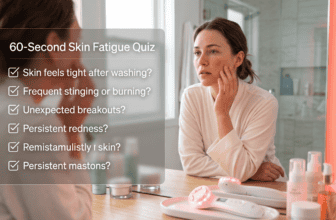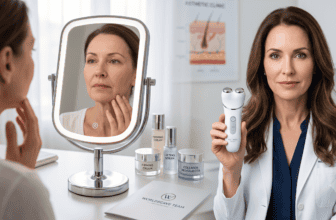

The Mirror Moment: When Your Skincare Routine Stalls
It happens to almost everyone eventually. You stand in front of the bathroom mirror, bathed in the unforgiving glare of overhead LED lights, and notice a stubborn patch of discoloration that refuses to fade. Perhaps it is accompanied by the faint, downward shadow of marionette lines etching their way from the corners of your mouth to your jawline. You have spent months—maybe years—faithfully patting expensive Vitamin C drops onto your skin, expecting them to deliver the flawless, airbrushed complexion promised on the bottle.
Yet, the dark spots remain, completely unchanged.
The truth is, your topical brightening serums have stalled because they are fighting an uphill battle against physics and biology. Superficial sun damage and deep-rooted dermal hyperpigmentation require entirely different treatment protocols. When active ingredients cannot penetrate deep enough to break up dense melanin clusters, your skin needs target thermal disruption. As your digital laser clinic director, I am here to help you diagnose your skin tone, pain tolerance, and spot behavior to find a routine that actually delivers results, balancing honest home-based repairs against costly, invasive clinical interventions.
The Science: Why Marionette Lines and Deep Hyperpigmentation Form After 40
After we cross the threshold of 40, our skin undergoes a dramatic biological shift. The cellular turnover rate slows down significantly, and the dermal-epidermal junction flattens. This structural collapse is directly responsible for both sagging skin—such as the formation of marionette lines—and the pooling of stubborn pigment in the deeper layers of the dermis.
Marionette lines form due to a combination of gravity, fat pad migration, and a rapid decline in structural proteins. As collagen and elastin levels drop by approximately 1% to 2% every year after age 30, the midface loses its supportive scaffolding. This causes the cheeks to sag downward, creating folds around the mouth.
Simultaneously, years of cumulative ultraviolet (UV) exposure trigger chronic, low-grade inflammation in the skin. Melanocytes—the pigment-producing cells located at the base of the epidermis—become hyperactive and erratic. Instead of distributing melanin evenly, they dump large amounts of pigment deep into the dermis. This is why superficial topical treatments, like standard Vitamin C drops, fail. They simply cannot penetrate deep enough to reach these dermal pigment pools, leaving you with stubborn dark spots that require physical, thermal, or energy-based disruption to break apart.
The “Anti-Filler” Movement: Why Women Are Looking for Alternatives
For the past two decades, the standard clinical answer to facial aging was simple: inject it. When marionette lines appeared, doctors injected dermal fillers to plump up the folds. When dark spots multiplied, patients were funneled into aggressive, in-office chemical peels or high-intensity ablative lasers that required weeks of painful downtime.
Today, a massive “anti-filler” and “anti-needle” movement is sweeping the skincare world. Women are increasingly frustrated with the artificial, over-plumped look often referred to as “pillow face,” which occurs when filler migrates or distorts natural facial expressions. Furthermore, clinical procedures are incredibly expensive, often costing thousands of dollars per session, and carry risks of scarring, infection, and rebound hyperpigmentation—especially for those with deeper skin tones.
As a result, there is a massive shift toward high-tech, home-based repair. Women are looking for smart, self-directed protocols that work in harmony with the skin’s natural healing systems. By utilizing target thermal disruption, microcurrents, and bio-active topicals, you can remodel collagen and vaporize stubborn pigment safely from the comfort of your own home, achieving natural, long-lasting rejuvenation without the clinical price tag.
The 7 At-Home Methods That Actually Work
Not all home-based treatments are created equal. To help you navigate the noisy beauty market, here are the seven most effective at-home methods for clearing dark spots and firming structural sagging, ranked by their clinical efficacy.
1. Sapphire Ice-Cooling IPL Technology
Intense Pulsed Light (IPL) is the gold standard for targeting superficial and mid-dermal pigment. Traditional IPL devices can feel like a hot rubber band snapping against the skin, but modern sapphire ice-cooling technology keeps the epidermis at a comfortable temperature while allowing therapeutic light energy to penetrate deep into the dermis. The light energy is absorbed by the dark melanin in your spots, converting to heat and shattering the pigment clusters so your body can naturally eliminate them. This dual action also stimulates mild thermal neocollagenesis, helping to firm the surrounding skin.
Skin Type Safety: Best suited for fair to medium skin tones (Fitzpatrick scales I–IV) with high-contrast dark spots.
Ulike Air 10 IPL Hair Removal and Skin Toning Device
2. Non-Ablative Fractional Laser Devices
Unlike IPL, which uses broad-spectrum light, non-ablative fractional lasers use precise, single-wavelength laser beams to create microscopic treatment zones deep in the skin. This triggers a powerful cellular healing cascade without damaging the outer layer of the skin. It is highly effective for both breaking up deep-seated melasma and restructuring the collagen matrix to smooth out deep facial folds like marionette lines.
3. Microcurrent Facial Toning
If your primary concern is the physical sag of marionette lines, microcurrent therapy is your non-invasive alternative to a surgical lift. These devices send low-level electrical currents that mimic the body’s natural ionic flow, gently stimulating and re-educating the underlying facial muscles. By lifting the cheeks and jawline, microcurrents diminish the depth of marionette shadows.
4. Targeted Tyrosinase Inhibitors (Tranexamic Acid & Cysteamine)
To stop dark spots from returning, you must halt the chemical pathway that creates pigment. While Vitamin C is a mild antioxidant, advanced tyrosinase inhibitors like Tranexamic Acid, Cysteamine, and Kojic Acid work at a cellular level to block the enzymes responsible for melanin production. Pairing these topicals with light-based devices dramatically speeds up your clearance rate.
SkinCeuticals Discoloration Defense
5. At-Home LED Red & Near-Infrared Light Therapy
While IPL and lasers rely on targeted thermal damage to destroy pigment, LED photobiomodulation uses low-level light therapy (LLLT) to heal and rebuild. Red light (630nm) stimulates collagen synthesis to plump up fine lines, while near-infrared light (830nm) penetrates deep to reduce chronic inflammation and accelerate cellular recovery, making it the perfect post-treatment pairing for home lasers.
6. Encapsulated Retinaldehyde
To sweep away the pigment shattered by your IPL or laser treatments, you must accelerate cellular turnover. Standard retinol often causes irritation and inflammation, which can trigger more hyperpigmentation. Encapsulated retinaldehyde is converted by the skin much faster than retinol, delivering prescription-strength cellular turnover with a fraction of the irritation.
7. Myofascial Gua Sha and Lymphatic Drainage
While it won’t vaporize pigment, manual myofascial release is highly effective for relieving the muscle tension that pulls the corners of the mouth downward. Regular, targeted massage with a heavy stone Gua Sha tool releases tension in the depressor anguli oris (the muscle responsible for frowning) and drains accumulated fluid, instantly softening the appearance of marionette lines.
Wildling Empress Stone Gua Sha Tool
The Stacked Protocol: Your AM/PM Routine
To safely maximize your results without causing barrier damage or post-inflammatory hyperpigmentation, you must organize these potent treatments into a structured weekly routine. Below is a highly effective, stacked protocol designed for skin over 40.
Morning Protocol (Protect & Prevent)
- Cleanse: Use a gentle, non-stripping, hydrating cleanser.
- Prevent: Apply a targeted tyrosinase inhibitor serum (such as Tranexamic Acid) to suppress melanin production.
- Hydrate: Apply a lightweight hyaluronic acid gel or barrier support serum.
- Shield: Apply a generous layer of broad-spectrum SPF 50 mineral sunscreen. This step is non-negotiable; energy devices make your skin temporarily more sensitive to the sun.
Evening Protocol (Remodel & Repair)
- Double Cleanse: Use an oil-based cleanser followed by a water-based gel cleanser to remove sunscreen, makeup, and pollution.
- Device Session (2-3 nights per week): On clean, completely dry skin, perform your targeted IPL or non-ablative fractional laser treatment. Follow the manufacturer’s guidelines strictly.
- Soothe: Immediately following your device session, apply an LED Red Light therapy mask for 10 minutes to calm the skin and reduce redness.
- Active Treatment (On non-device nights): Apply your encapsulated retinaldehyde to accelerate cellular turnover and sweep away damaged pigment.
- Barrier Recovery: Seal everything in with a rich, ceramide-heavy barrier cream to support epidermal recovery.
Comparing At-Home Technology vs. Clinical Intervention
Before investing in your skin remodeling journey, it is important to understand the honest trade-offs between at-home devices and clinical procedures.
| Treatment Type | Estimated Cost | Downtime | Results Timeline | Pros & Cons |
|---|---|---|---|---|
| At-Home Sapphire IPL / Laser | $300 – $500 (One-time cost) | Zero to minimal redness (under 2 hours) | 4 to 12 weeks of consistent use | Pros: Safe, private, cost-effective, no downtime. Cons: Requires discipline and takes longer to see results. |
| Clinical Q-Switched/Pico Laser | $1,500 – $3,000 (Multi-session package) | 3 to 7 days (crusting, peeling, swelling) | 1 to 3 sessions (3 to 6 weeks) | Pros: Rapid clearance, highly precise. Cons: Very expensive, risk of rebound pigment, painful. |
| Clinical Dermal Fillers | $800 – $2,000 (Per syringe, annual) | 1 to 3 days (bruising and swelling) | Instant structural volume | Pros: Immediate lifting of marionette folds. Cons: Does not improve skin quality, risk of migration. |
Final Verdict: Restoring Your Skin from Within
If your brightening serums have stalled, it is not a sign that your skin cannot heal; it is simply a sign that you need to change your delivery system. While topical ingredients play a vital supportive role in preventing new pigment from forming, they cannot physically dismantle deep-seated dermal damage or lift sagging tissues on their own.
By shifting your focus from temporary cosmetic fillers to targeted home-based energy devices—like sapphire-cooled IPL and non-ablative fractional lasers—you can safely remodel your skin from the inside out. Be patient, stay consistent with your stacked protocol, and protect your skin daily from the sun. True, radiant skin health is not built in a day, but with the right tools, it is entirely within your reach.